\ Bestiny : Health

Translate

Breaking

Showing posts with label Health. Show all posts

Friday, 13 November 2020

November 13, 2020

New cancer clinical trial: Multimodal Program for Cancer Related Cachexia Prevention

Published on: November 13, 2020 at 10:30PM
Conditions:   Neoplasms;   Cancer;   Cachexia;   Malnutrition;   Educational Problems
Intervention:   Other: Multimodal education and support program for cancer related cachexia prevention
Sponsors:   Cyprus University of Technology;   German Oncology Centre, Limassol, Cyprus
Active, not recruiting
https://ift.tt/3ltzfTe

Thursday, 12 November 2020

Monday, 9 November 2020

November 09, 2020

New diabetes clinical trial: DAPASALT: An Open Label, Phase IV, Mechanistic, Study to Evaluate the Natriuretic Effect of 2-Week Dapagliflozin Treatment in Type 2 Diabetes Mellitus Patients With Impaired Renal Function

Published on: November 09, 2020 at 10:30PM
Conditions:   Diabetes Mellitus, Type 2;   Impaired Renal Function
Intervention:   Drug: Dapagliflozin 10 MG [Farxiga]
Sponsors:   George Clinical Pty Ltd;   University Medical Center Groningen;   Ground Zero Pharmaceuticals
Not yet recruiting
https://ift.tt/3n7Mg5a
November 09, 2020

New diabetes clinical trial: Active You: Feasibility of a Unique Physical Activity Program to Prevent Diabetes and Heart Disease

Published on: November 09, 2020 at 10:30PM
Conditions:   Cardiovascular Risk Factor;   Prediabetes;   Overweight and Obesity;   Sedentary Behavior
Interventions:   Behavioral: The Physical Activity for The Heart (PATH) intervention;   Behavioral: Be Active Your Way Booklet
Sponsor:   University of Pittsburgh
Recruiting
https://ift.tt/3lf1pRA

Friday, 6 November 2020

Wednesday, 4 November 2020

November 04, 2020

New story in Health : U.S. Sets New Daily COVID-19 Record Amid Election Turmoil


New confirmed cases of the coronavirus in the U.S. have climbed to an all-time high of more than 86,000 per day on average, in a glimpse of the worsening crisis that lies ahead for the winner of the presidential election.

Cases and hospitalizations are setting records all around the country just as the holidays and winter approach, demonstrating the challenge that either President Donald Trump or former Vice President Joe Biden will face in the coming months.

Daily new confirmed coronavirus cases in the U.S. have surged 45% over the past two weeks, to a record 7-day average of 86,352, according to data compiled by Johns Hopkins University. Deaths are also on the rise, up 15 percent to an average of 846 deaths every day.

The total U.S. death toll is already more than 232,000, and total confirmed U.S. cases have surpassed 9 million. Those are the highest totals in the world, and new infections are increasing in nearly every state.

Several states on Wednesday reported grim numbers that are fueling the national trends. Texas reported 9,048 new cases and 126 deaths, and the number of coronavirus patients in Missouri, Nebraska and Oklahoma hospitals set records. About a third of the new cases in Texas happened in hard-hit El Paso, where a top health officials said hospitals are at a “breaking point.”

Public health experts fear potentially dire consequences, at least in the short term.

Trump’s current term doesn’t end until Jan. 20. In the 86 days until then, 100,000 more Americans will likely die from the virus if the nation doesn’t shift course, said Dr. Robert Murphy, executive director of the Institute for Global Health at Northwestern University’s Feinberg School of Medicine, echoing estimates from other public health experts.

“Where we are is in an extremely dire place as a country. Every metric that we have is trending in the wrong direction. This is a virus that will continue to escalate at an accelerated speed and that is not going to stop on its own,” said Dr. Leana Wen, a public health expert at George Washington University.

Dr. Susan Bailey, president of the American Medical Association, said there are things Americans can do now to help change the trajectory.

“Regardless of the outcome of the election, everyone in America needs to buckle down,″ Bailey said.

“A lot of us have gotten kind of relaxed about physically distancing, not washing our hands quite as often as we used to, maybe not wearing our masks quite as faithfully. We all need to realize that things are escalating and we’ve got to be more careful than ever,” she said.

Polls showed the public health crisis and the economy were top concerns for many Americans.

They are competing issues that Trump and Biden view through drastically different lenses.

Trump has ignored the advice of his top health advisors, who have issued increasingly urgent warnings in recent days about the need for preventive measures, instead holding rallies where face coverings were rare and falsely suggesting that the pandemic is waning.

By contrast, Biden has rarely been seen in public without a mask and made public health a key issue. Whether his voice will carry much influence if Trump is declared the winner is uncertain.

“President Trump has already made clear what his strategy is for COVID-19, which is to pretend that there is not a contagious virus all around us,” Wen said. Trump has been touting treatments and vaccines, which won’t be widely available to all Americans until at least mid-2021, she noted.

“There’s a lot of suffering that is going to happen before then, which could have been prevented,” Wen said.

Federal health officials have said they believe a vaccine could get emergency use authorization before the end of the year. The first limited supplies of doses would then be immediately distributed to the most vulnerable populations, which is likely to include frontline health care workers. Doses would then gradually become more widely available.

The timeline hinges on having a vaccine that’s shown to be safe and effective, which experts note is not yet a certainty. “The vaccine has to move at the speed of science,” said Dr. Joshua Sharfstein, vice dean for public health practice at Johns Hopkins University and former Maryland state health department chief.

On the treatment front, the makers of two experimental antibody drugs have asked the Food and Drug Administration to allow emergency use of them for people with mild to moderate COVID-19, and Trump, who received one when he was sickened last month, has said he wanted them available right away.

So far, the FDA has granted full approval to only one drug — the antiviral remdesivir — for hospitalized patients. Dexamethasone or similar steroids are recommended for certain severely ill patients under federal treatment guidelines.

The government continues to sponsor many studies testing other treatments alone and in combination with remdesivir.

But the development of treatments could be affected if Trump makes good on threats to fire Dr. Anthony Fauci, the government’s top infectious disease doctor, or other top health officials Trump has clashed with.

Most Americans support mandating mask-wearing in public and think preventing the virus from spreading is a higher priority than protecting the economy, according to AP VoteCast, a nationwide survey of over 133,000 voters and nonvoters conducted for The Associated Press by NORC at the University of Chicago.

While several European countries have imposed or proposed new lockdowns and other restrictions to control surging cases, Trump has resisted those approaches and has focused on rebuilding the economy.

Absent a national pandemic strategy, curbing virus spread in the U.S. will depend on more Americans taking necessary precautions and the upcoming holiday season will make that a challenge, said Dr. Cedric Dark, an emergency physician in Houston.

“It’s going to be Thanksgiving, winter break for college students, Christmas time and Hannukah,” but families may have to resist close get-togethers this year, he said. Outbreaks on college campuses mean many students may be bringing the virus home and spreading it to parents and grandparents, he said.

Dark, who hasn’t seen his parents in over a year, has had to adjust his own holiday plans. This year, Thanksgiving will be in his parents’ garage, with the door up, chairs at least 6 feet apart, and a space heater if needed.

“We can at least see each other, from a distance,’’ Dark said.

___

AP Medical Writer Marilynn Marchione and AP reporter Candice Choi contributed.

Monday, 2 November 2020

November 02, 2020

New story in Health : Frozen Food Packages in China Keep Testing Positive For Coronavirus. Here’s Why Health Experts Aren’t Worried


They’ve reportedly found it on packages of Ecuadorian shrimp, squid from Russia and Norwegian seafood.

Since June, Chinese health authorities have been detecting genetic traces of SARS-CoV-2, the virus that causes COVID-19, on refrigerated and frozen foods from around the world. Then, on Oct. 17, the Chinese Centers for Disease Control (CDC) announced it had isolated active SARS-CoV-2 on packs of imported fish. The agency says this world-first discovery, made while tracing a recent outbreak in Qingdao to two dock workers, shows contaminated food packaging can cause infections.

While it remains unclear if the dock workers actually contracted COVID-19 from the seafood they were handling, the government is stepping up precautions. Qingdao will now scrutinize all incoming frozen food (after testing all 9 million residents), while the Beijing city government has urged companies to avoid importing frozen foods from countries badly hit by the pandemic — though it did not specify which ones.

Concern over possible transmission through imported food is running high in China, which has nearly stamped out domestic transmission of the pathogen. It is one of the only countries to impose wide-scale coronavirus inspections on incoming shipments.

Elsewhere, health authorities have been more skeptical. The U.S. Centers for Disease Control says there is “no evidence” to suggest food is associated with spreading the virus, while the World Health Organization (WHO) says it’s not necessary to disinfect food packaging. New Zealand meanwhile ruled out a theory that an August outbreak was connected to a cold-chain storage facility.

Read more: Wuhan Strives to Return to Normal, But Scars From the Pandemic Run

China’s CDC says 670,000 samples from frozen foods and packaging had been tested for COVID-19 as of Sept. 15. Reportedly, only 22 of them were positive (and prior to the Qingdao case it was not clear if any of the detected coronavirus was still active when thawed).

In recent months, the world’s second-largest economy has nevertheless temporarily suspended a slew of fish and meat imports, disrupting trade with several countries and reportedly causing shipping bottlenecks.

Several health experts have disputed the necessity of such precautions. While cold temperatures can preserve coronaviruses, they remain doubtful food and its packaging pose a major threat.

“It’s theoretically plausible, but the risk is much lower than the other more established routes of transmission for this virus,” says Siddharth Sridhar, a microbiologist at the University of Hong Kong (HKU).

What has China found?

China stepped up monitoring of imported foods after a second wave in June that infected 335 people was linked to Beijing’s sprawling Xinfadi market. The outbreak, which broke the capital’s run of 56 consecutive days without any new local infections, prompted a partial shutdown of the city and a probe into the origins.

Authorities suggested supplies of salmon from Europe may have been the source after the virus was reportedly discovered on a filleting board. This led to a temporary freeze on salmon imports, with repercussions for exporters in Chile, Norway, the Faroe Islands, Australia and Canada. Although others have disputed that the fish were to blame, investigators in China have since doubled down on the potential culprit.

Also in June, China suspended poultry imports from a Tyson Foods plant in the U.S. amid concerns about an outbreak at the facility. And in Tianjin, a major port, authorities reportedly began requiring coronavirus tests for all meat and seafood containers.

At the time, Li Fengqin, the head of the lab at China’s National Center for Food Safety Risk Assessment told reporters that the possibility of contracting the virus from frozen food and packages could not be ruled out.

Other cities jumped into action. In August, Shenzhen—the booming technology hub that borders Hong Kong—set up a central warehouse where all imported food is screened before being sold.

As of early Sept., China had temporarily banned imports from 56 companies in 19 countries, including from the U.S., Indonesia and Europe.

Cui He, president of the China Aquatic Products Processing and Marketing Alliance, acknowledged that it was impractical to institute a total ban on imported frozen food. “More than 100 countries worldwide export frozen seafood to China,” he told state-run media.

Exporters of meat, dairy and other food items have instead been asked to sign documents declaring their products have not been contaminated by coronavirus.

Such scrutiny has drawn flak from industry bodies. In September, the International Commission on Microbiological Specifications for Foods called restrictions around food imports “not scientifically justified.”

Getting COVID-19 from food or packaging isn’t easy

Getting COVID-19 from food packaging is no easy matter and, while possible, depends on a complex series of events, health experts told TIME.

First, an infected person would have to cough or sneeze on packaging. Then, while the virus was still active, someone else would need to touch that packaging before touching their own eyes, nose or mouth.

“Everything we have come to know about this virus indicates airborne person-to-person is the mode of transmission,” says Emanuel Goldman, a professor of microbiology at Rutgers University.

Researchers are still studying how long the virus can remain active on food surfaces in varying temperatures. According to the WHO, coronaviruses in general are very stable in a frozen state, and studies have even shown survival for up to two years at -4°F.

But even if food or packaging does test positive, that doesn’t mean it’s infectious.

“The most commonly used tests can tell us that there has been some viral components on the package, [but] we do not know the state of the virus,” says Sarah Cahill, a senior food standards officer at Codex Alimentarius Commission, the body responsible for developing food standards under the WHO. “Was it still intact? Was it still viable? Was it still capable of causing infection?”

Read More: COVID-19 Is Transmitted Through Aerosols. We Have Enough Evidence, Now It Is Time to Act

How to stay safe

The U.S. Food and Drug Administration says it is aware of China screening incoming produce, seafood and meat for COVID-19. But in a statement emailed to TIME, a spokesperson says, “Currently there is no evidence of food, food containers, or food packaging being associated with transmission of COVID-19.”

Sridhar of HKU does not recommend widespread screening of imported food items, which he likens to “looking for a needle in a haystack.”

Dale Fisher, a professor of medicine at the Yong Loo Lin School of Medicine, National University of Singapore, says China’s concern stems from a different approach to the virus than much of the rest of the world is taking.

He says China has “chosen to monitor this because they have zero tolerance for cases. If you’re not aiming for zero, then there’s a different risk tolerance.”

In any case, regular consumers should not be worried, he says.

“By the time food gets to a consumer it has been stacked and moved around enough to see the virus very diluted and unlikely at an adequate dose to cause infection.”

To avoid getting coronavirus, health experts continue to advise people to wash their hands with soap and water and avoid touching their eyes, nose and mouth.

Keep up to date with our daily coronavirus newsletter by clicking here.

Friday, 30 October 2020

October 30, 2020

New asthma clinical trial: Asthma Digital Study

Published on: October 30, 2020 at 09:30PM
Condition:   Asthma
Intervention:   Other: Digital Tools for Asthma Self-Management
Sponsors:   Anthem, Inc;   Apple Inc.;   University of California, Irvine;   HealthCore, Inc.;   CareEvolution, LLC
Not yet recruiting
https://ift.tt/3jEQvmz
October 30, 2020

New asthma clinical trial: Study to Assess PT010 in Adult and Adolescent Participants With Inadequately Controlled Asthma.

Published on: October 30, 2020 at 09:30PM
Condition:   Asthma
Interventions:   Drug: BGF MDI 320/28.8/9.6 Î¼g;   Drug: BGF MDI 320/14.4/9.6 Î¼g;   Drug: BFF MDI 320/9.6 Î¼g;   Drug: BFF pMDI 320/9 Î¼g
Sponsor:   AstraZeneca
Not yet recruiting
https://ift.tt/3ebUbv8
October 30, 2020

New asthma clinical trial: Study to Assess PT010 in Adult and Adolescent Participants With Inadequately Controlled Asthma (LOGOS).

Published on: October 30, 2020 at 09:30PM
Condition:   Asthma
Interventions:   Drug: BGF MDI 320/28.8/9.6 Î¼g;   Drug: BGF MDI 320/14.4/9.6 Î¼g;   Drug: BFF MDI 320/9.6 Î¼g;   Drug: BFF pMDI 320/9 Î¼g
Sponsor:   AstraZeneca
Not yet recruiting
https://ift.tt/2HR8Zn0

Thursday, 29 October 2020

Wednesday, 28 October 2020

October 28, 2020

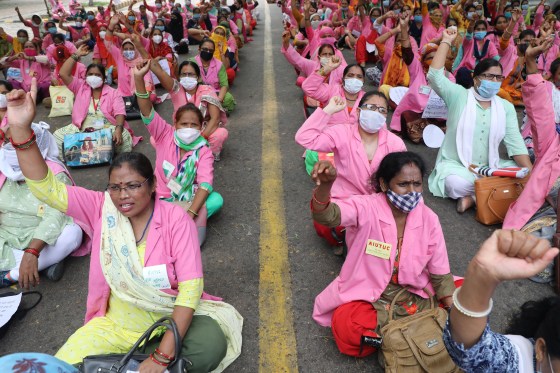
New story in Health : Little Recognition and Less Pay: These Female Healthcare Workers Are Rural India’s First Defense Against COVID-19


Archana Ghugare’s ringtone, a Hindu devotional song, has been the background score of her life since March. By 7 a.m. on a mid-October day, the 41-year-old has already received two calls about suspected COVID-19 cases in Pavnar, her village in the Indian state of Maharashtra. As she gets ready and rushes out the door an hour later, she receives at least four more.

“My family jokes that not even Prime Minister Modi gets as many calls as I do,” she says.

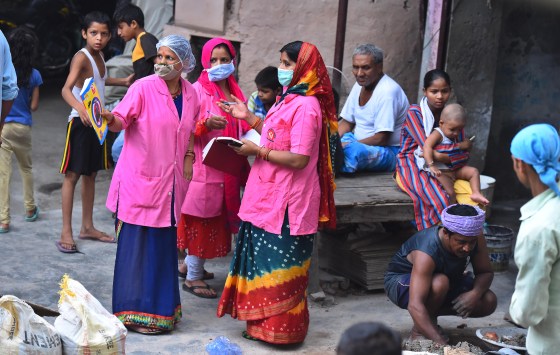
Ghugare, and nearly a million other Accredited Social Health Activists (ASHAs) assigned to rural villages and small towns across India, are on the front lines of the country’s fight against the coronavirus. Every day, Ghugare goes door to door in search of potential COVID-19 cases, working to get patients tested or to help them find treatment.

With 8 million confirmed COVID-19 cases, India has the second-highest tally in the world after the United States and its health infrastructure struggled to cope with the surge in COVID-19 patients this summer. India spends only 1.3% of its GDP on public health care, among the lowest in the world. The situation is stark in rural areas where 66% of India’s 1.3 billion people live and where health facilities are scant and medical professionals can be hard to find.

India’s ASHA program is likely the world’s largest army of all-female community health workers. They are the foot soldiers of the country’s health system. Established in 2005, a key focus of the program was reducing maternal and infant deaths, so all recruits are women. They have also played an essential role in India’s efforts to eradicate polio and increase immunization, according to numerous studies.

Read More: How the Pandemic Is Reshaping India

But even as health authorities have leaned on ASHAs to quell the spread of COVID-19 in rural areas, where a substantial number of new cases have been reported, many of these health care workers say the government is failing them. Pay was meager to begin with, but some workers have reported not being paid for months. Their hours have increased dramatically, but pay rises, when they have come, have not reflected the increased demands. Many ASHAs have also complained about not being provided adequate protective equipment for their high-risk work.

“They are the unsung heroes who are fighting to contain the unfettered spread of the virus in rural areas,” says Dr. Smisha Agarwal, Research Director at the John Hopkins Global Health Initiative. She argues it is vital to improve pay to boost morale and sustain this frontline workforce.

—

Ghugare was chosen from her village of 7,000 people in 2011. Since then, she has overseen countless births, meticulously monitored the health of thousands of newborn babies and strictly ensured immunization through door-to-door awareness campaigns. The personal relationships she built over the years have helped in the fight against COVID-19, giving her a good grasp of the medical histories of most of the 1,500 people assigned to her. “It’s all in here,” she says pointing to her head.

Before the pandemic, she was expected to work two to three hours per day, for which she was paid about 2,000 rupees ($27) a month, with incentives for completing tasks in the community. Now, she’s spending 9 to 10 hours a day working to combat COVID-19. She had to cut back her other job working at a farm, and most of the bonuses have dried up as well. The Indian government has given her a 1,000-rupee ($13.50) COVID-19 stipend, but that doesn’t make up for the lost income.

Conditions like these are pushing many of these women to breaking point. Some 600,000 ASHAs went on strike in August to demand better pay and recognition as permanent government employees. (They are currently classified as volunteers, which renders them ineligible for minimum wages and other benefits.)

“The extra work we used to do earlier to ensure our stomachs weren’t empty has stopped now,” Ghugare says.

Indias Army of 600,000 Virus-Hunting Women Goes on Strike
New Delhi, Aug. 9, 2020. ASHAs protest in New Delhi, demanding better pay and recognition. Photo by T. Narayan/Bloomberg via Getty Images


Read More: India’s Biggest Slum Successfully Contained COVID-19. But Can Its Residents Survive the Economic Collapse?

Heading out the door, she puts on a face mask and headscarf to protect herself while mentally running through the symptoms of one of the possible COVID-19 patients she had been phoned about earlier. Knowing that the individual suffers from diabetes, which makes people more vulnerable to coronavirus, Ghugare begins working out how to prioritize the case and arrange transportation to a center, about 40 minutes away, for urgent testing.

Some cases are particularly challenging. There are days when villagers refuse to talk to her. Worried about being forced to go to the hospital and missing work—a major hardship when people depend on daily wages for a hand-to-mouth existence—people often hide symptoms. Then there is also the menace of fake news, often spread on WhatsApp.

Ghugare arrives at a house in the sweltering heat, where it takes her almost 20 minutes to persuade a man to get his wife tested for COVID-19. Because of a false rumor spread via messaging apps, he is convinced his wife’s kidneys will be removed if she goes to hospital. In the end, he relents. “Dealing with fake WhatsApp forwards is one of the most exhausting parts of the job,” Ghugare says.

By around 1:30 p.m., she has already worked six hours. Before the pandemic, she would have wrapped up and headed to her second job. But now she still has a long list to get through to meet her daily target of visiting 50 houses.

Asha Health Workers Do Door To Door Survey To Identify Covid-19 Cases In Delhi
Photo by Raj K Raj/Hindustan Times via Getty ImagesNew Delhi, June 25: ASHAs talk amongst themselves while conducting door to door survey to identify COVID-19 cases. Photo by Raj K Raj/Hindustan Times via Getty Images

—

Demands like these have driven many ASHAs to protest. “We are warriors who were sent to war without any weapons,” says Sunita Rani, an ASHA from the northern state of Haryana. She has been protesting against the state government since July and says she won’t give up until their demands are met. “If we can fight a virus, we definitely know how to fight our governments.” The Indian government hasn’t yet responded to their demands for permanent government employment.

Most health experts seem to agree that ASHAs are underpaid. But some say that making their roles full-time is more complicated. “The beauty of this role is the mix of incentives that tend to energize ASHAs to perform better,” says Dr. Jyoti Joshi, the director of South Asia at the Center for Disease Dynamics, Economics and Policies, a public health research organization. She says retaining the incentives for completing tasks, while adding benefits like free family health checkups, might be one solution.

Pay varies by state, and salaries can range from 2,000 rupees ($27) to 10,000 rupees ($135) per month, according to a national union for ASHAs. Many workers also depend on receiving bonuses. For instance, Ghugare receives 100 rupees ($1.25) if she vaccinates a child against measles, mumps and rubella and 600 rupees ($8) for delivering a baby for a family living below the poverty line.

Some economists argue that making nearly a million female health care workers full-time employees, and paying them more, will not only benefit India’s health system but might also help revive the country’s battered economy, one of the worst hit by the pandemic. “Employing and putting wages into the hands of so many people will definitely be beneficial to the rural economy, ” says Dipa Sinha, an economist at the Ambedkar University in New Delhi.

It might also help recover India’s plummeting rate of female workplace participation, for which the country is among the bottom 10 in the world. Experts have attributed this to cultural attitudes and the slowdown in the agricultural sector, where most rural women work. Sinha says that this gender disparity plays into the issue of ASHAs not being recognized for their work. “Who volunteers for six to eight hours a day?” she says. “It’s because they are women that their work is undermined. You can’t do this to a cadre of men.”

Ghugare shares that sentiment although she didn’t take part in the protests. With her two children growing older, expenses are increasing. An increased salary with benefits would help her give her family a better life.

As she walks back home at dusk, she knows her day isn’t done yet. There is household work to get to before getting started with a report on the day’s survey. It will be midnight before she calls it a day. That is, if the phone doesn’t ring again.

“It feels like there is a sword over our heads,” she says. “A hanging sword.”

Monday, 26 October 2020

October 26, 2020

New cancer clinical trial: FOCAL HIGH-INTENSITY FOCUSED ULTRASOUND FOR PRIMARY LOCALIZED PROSTATE CANCER: MIDTERM ONCOLOGICAL OUTCOMES

Published on: October 26, 2020 at 09:30PM
Condition:   Prostate Cancer
Intervention:   Procedure: Retrospectively review of medical data in patients treated by focal HIFU for primary localized prostate cancer
Sponsor:   Hospices Civils de Lyon
Completed
https://ift.tt/2HESQ3W