\ Bestiny : op-ed

Translate

Breaking

Showing posts with label op-ed. Show all posts

Thursday, 12 November 2020

November 12, 2020

Our Dueling American Realities Remain. Biden, Harris—And All of Us—Have Much Work Ahead


Our Dueling American Realities Remain. Biden, Harris—And All of Us—Have Much Work Ahead

Early last year, I went to a small dinner in New York for one of my predecessors in this job, former TIME editor turned best-selling biographer, professor and PBS host Walter Isaacson. We wound up talking about–what else?–the upcoming election. TIME had a particularly important role to play this season, Walter suggested, with the stakes so high and a record number of contenders in the mix. Why not do in-depth profiles, interviewing the major candidates so that we get to know not just their positions and platforms but who they are as human beings?

And so we did.

TIME contributor Anand Giridharadas traveled some 6,000 miles with Bernie Sanders in search of the candidate’s inner self. TIME’s Charlotte Alter toured the South Bend, Ind., “white house” that Pete Buttigieg shares with husband Chasten and dogs Buddy and Truman. Haley Sweetland Edwards talked white papers and policy wonkery with Elizabeth Warren. Lissandra Villa sat with Beto O’Rourke, Andrew Yang and Julián Castro. Abby Vesoulis took us into Amy Klobuchar’s Capitol Hill apartment, down to the books on her bookshelf.

Correspondent Molly Ball had the winning hand, with profiles of both Joe Biden and Kamala Harris that captured the candidates searching for their places in a crowded party. (They found them.) Brian Bennett, who covers the White House for TIME, took us deep into the machinery of Donald Trump’s campaign. Asked if he, like every other modern President running for re-election, would reach beyond his political base, Trump said, “It might happen. But I think my base is so strong, I’m not sure that I have to do that.” (He didn’t.)

From there, our team of reporters and producers tracked a campaign of global importance as it met a pandemic of global impact, the two coalescing in a cover this summer about “The Plague Election.” They talked to voters, hundreds of them, and they reported on the flood of misinformation, spread this cycle not so much by foreign actors as by domestic ones.

“It’s a privilege to cover history from a platform like ours, but it’s also difficult and daunting, even before you throw in a raging pandemic and the President of the United States building his campaign around an attempt to discredit your work,” says Alex Altman, TIME’s deputy Washington bureau chief, who led our coverage alongside bureau chief Massimo Calabresi and senior editors Edwards and Krista Mahr.

Our cover this week, an image from the event where Biden and Harris delivered victory speeches on Nov. 7, includes the phrase from Biden’s remarks, and from Ecclesiastes, A time to heal. It’s reminiscent of a long-ago TIME cover following another season of division and pain, on the 1974 issue featuring newly inaugurated President Gerald Ford with the line The Healing Begins. (For some reason, as a 7-year-old, I stashed our family’s copy away and still have it after all these years.)

Healing is a long-running theme of Biden’s, one that Ball presaged in her original profile of him. “Joe’s a healer,” Biden’s wife Jill told her. “He feels people’s problems because he’s been through a lot of it himself.” Harris, too, echoed this in her victory speech, committing the new Administration to “heal the soul of our nation.”

This healing will not come easy. Biden’s win, projected by organizations from the Associated Press to Fox News, is statistically clear and in line with how every presidential election has been called for more than a century. State election officials have reported no irregularities that could affect the outcome, nor has the President cited any. Yet he is making an unprecedented effort to use the levers of government to resist. And of course there is the ongoing crisis reflected in the masks on the faces of the President-elect and Vice President–elect on our cover, a crisis that continues to disproportionately affect the health and livelihoods of the most marginalized in our society.

Our dueling American realities remain. Biden and Harris, and all of us, have much work ahead.

Wednesday, 11 November 2020

November 11, 2020

I Face up to Life in Prison for Violence Against the Thai Queen. I’m Innocent


I Face up to Life in Prison for Violence Against the Thai Queen. I’m Innocent

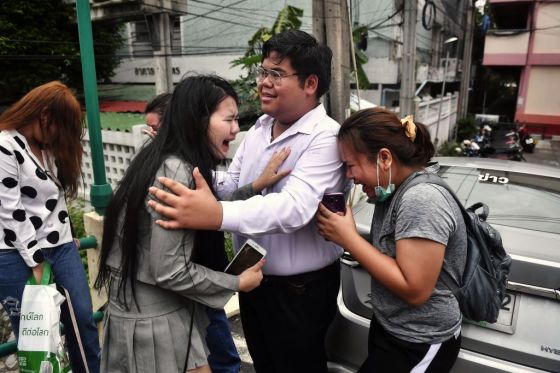
Bunkueanun ‘Francis’ Paothong, a 21-year-old bespectacled university student, is one of three protesters recently arrested under the rarely invoked section 110 of Thailand’s criminal code. The charge of violence against the queen carries a maximum sentence of life imprisonment, or, if the queen’s life is perceived to have been endangered, the death penalty can be applied. The protesters were attending an Oct. 14 rally when Queen Suthida’s motorcade drove by. Francis and another protester, Ekachai Hongkangwan, were arrested on Oct. 16, while child welfare activist Suranat Paenprasert was arrested the following week.

This is Francis’ account of how he wound up facing the harshest penalty levied against a demonstrator since this round of rallies against the Thai government and monarchy began in June. What follows has been edited for length and clarity.

You can say that my household is conservative in its nature. Initially, I was pretty much a conservative too.

I began to disagree with my parents when I was in senior high school. As I started reading newspapers and following American politics, I began to formulate my own opinions about how things could be if this country was still a democracy.

Three-quarters of my life have been spent under military dictatorship. At first, I did not really see any difference between democratically elected governments and military dictatorships, but at this point I am seeing that it has already had an effect on me and my future. In my mind, I began to question the government.

Read more: Why Are Thai Protesters Risking Jail to Criticize the King?

This was when I went to Canada as an exchange student. It was around the 2016 U.S. presidential debates. I recognized that whoever becomes president of the United States determines what will happen next around the world. During the debates, it dawned on me that I was drawn more to the Democrats, specifically to the ideas of Senator Bernie Sanders.

My thinking about the monarchy’s role in politics also developed over the years, although of course I still had a full-blown cry when the previous monarch, Rama IX [King Bhumibol Adulyadej], died. He was a father to our people.

My mother is a royalist through and through. While my parents believe that the king should be all powerful, that we should not touch even the issue of the monarchy, this is where I disagree. We should at least be able to talk to them about how this is going to work going forward. We are now living in the 21st century, it’s not like the Dark Ages anymore.

A week before I returned to Bangkok, when my university reopened [on Sept. 7], my parents and I had some discussions about me going to the protests. They said I could say whatever I like about [Prime Minister] Prayuth Chan-ocha or the constitution. But don’t touch the issue of the monarchy. I’ll do what I can, that’s what I said.

But by September, the whole landscape of the protests had changed and now there were these very lively, very public discussions about reforming the monarchy itself. I didn’t really know what to do. I thought I would be safe because I am more in the middle ground and not advocating for abolishing the monarchy.

Still, I tended to tell my parents I was not going to go, and they tended to believe me. But at the Oct. 14 protest, well—it was evident with my face on TV as the royal motorcade went by.

On that day, I was going to the protest, sure, but I was also there with a group called Anti One China-Thailand and we went to sell our merchandise to fund raise. But when we got to the Government House there was a whole series of events that transpired that resulted in me getting charged.

The police tried to move my friend away, grabbing her by the back and causing her to fall to the ground. That’s when I started using my megaphone. In the next 10 minutes, the police formed into what looked like what was about to be an anti-riot operation. The police started charging and the protesters moved in, and there I was in the middle. The next thing I knew, I saw the royal motorcade coming from over the police’s shoulder.

I was like, sh-t. Because something is bound to be wrong if you’re in front of the royal motorcade.

Read more: Meet the Lawyer Trying to Reform the Thai Monarchy

I tried to calmly tell the protesters to move away from the police barriers so that the royal motorcade could move through. People flashed the three-finger salute [from the Hunger Games]. Some shouted “My taxes!” meaning is like, hey, we are taxpayers, we should be able to have a say in running this country too.

The instant my parents saw me on TV they called me. They began to shout, ‘Francis, go back home.’ They told me they were coming to [Bangkok to] check on me. It was maybe a three or four-hour drive from my hometown. When I got back to my apartment, they were there and gave me an earful about how I should not have been [at the protest] in the first place. There was a lot of shouting. We fought for well over two hours.

It was the next day that I found out I was being charged.

I was reading a Thai language news outlet called Matichon and they had some details about the arrest warrant for Ekachai Hongkangwan and myself on charges of harming the queen’s liberty, section 110. When I saw the charges I was like f–k me, excuse my language, but I was dumbstruck. Protesters have been facing different charges, like maybe section 116 [for sedition] and section 112 [lese majeste] and violations of the public gatherings act and some other things like that. But these charges—oh God. Those who harm the queen’s liberty or intend to harm the queen’s liberty will face the jail time no less than 16 years up to life imprisonment. How the hell?

I told my mum about it. I had her read the news. And she began to panic.

TOPSHOT-THAILAND-POLITICS
Lillian SUWANRUMPHA—AFP/Getty Images Activist Bunkueanun “Francis” Paothong (C) comforts loved ones before he enters the Dusit Police Station to answer charges of harming Thailand’s Queen Suthida in Bangkok on Oct. 16, 2020.

The lawyers I called were from the group called Thai Lawyers for Human Rights. They usually handle cases with political prisoners and stuff like that. They told me in all their years of working as attorneys they had never seen a case like this before. There’s not even been a mention of it in the Thai Supreme Court mind you. The last time it was used against a common man was maybe more than 100 years ago? I didn’t know what to do until my mother called one of my relatives who used to be a police officer working in the courts. And he said you should turn yourself in tomorrow morning.

Friends who knew of my situation that night came by my apartment to try to console me.

It was well into midnight that I began my prayer. I thought to myself that whatever happens from now on, it will be a struggle. I am not a Christian man myself. But the prayer gave me comfort and strength.

The next morning, at maybe 7:00 or 8:00 a.m. I went to the police station with my parents. I kept thinking, ‘Well, whatever happens I have to face it.’ My lawyers already told me that I should not be hoping too much.

After I reported myself to the police, they arranged a car for me to bring me to the Border Patrol Police Region One headquarters, in Pathum Thani, the neighboring region of Bangkok. They brought me into an auditorium they had prepared specifically for handling the protests. They allowed only my lawyers and my parents to join me. We arrived there around noon. Ekachai, the co-defendant, came a bit later.

I knew outside, the protests were escalating. But there was nothing I could do except wonder what would happen next. I went to sleep at 8:00 p.m.

Around four hours later, I was woken up by another group of protesters that the police had brought in. It was two prominent protest leaders: Tattep Ruangprapaikitseree and his boyfriend James Panumas Singprom and some other people. I went to see if they were OK. And Tattep said to me, [your] case is so bad. He said, ‘Don’t worry. We will fight for you.’

There were some opposition members of parliament coming to visit me. [Opposition MP and activist] Rangsiman Rome came and said to me it is really, really cruel what you have gone through. And I know it is. But I was in good spirits. I was still cracking jokes at that time. At this point, I just thought how historically perverted it is that I am one of the first being charged with this.

Read more: Why This Thai Billionaire Is Risking It All to Back Reform

I was woken up again at 5:25 a.m. by the officers. I asked them if it was time to go to the criminal court now. They said yes.

While I was waiting one of the officers there told me something I didn’t really expect. The border police officer said, “I am rooting for you, so keeping fighting on. I believe in your innocence.” I said thank you.

This was my first time being in a court. My first time being detained. My first time being charged. I didn’t really have any expectations about it.

It was a very long day indeed. A lot of people came in. There were defendants all over the place. Some of them were charged with trying to harm others. Some of them were in possession of narcotics and stuff like that. There were some good people in there, they just wanted some money.

There was no hope for me to get a bail out. Everybody said so. Even Ekachai said so.

I didn’t know who Ekachai was until someone told me was a defendant in a previous, lese majeste case. He already went to jail once. He gave me a lot of advice.

Right before the prison transfer, the bail decision came. And I got out. [Ekachai did not make bail].

Now I have to wait for the evidence against me to be revealed. I have to report to the court on Dec. 4. But at this point I am more than hopeful that this case will be dismissed, or that my innocence will be proven should it proceed. I haven’t given up hope from the very start until now. I was innocent then. I am still innocent now.

I think they are trying to make an example of me. But I daresay that what happened has just made a lot of people angrier.

Even though the incident was unfortunate for my wellbeing and mental health, I don’t think I regret going to the protest that day actually. I was just there to exercise my rights and my liberty as a citizen of this country.

I still wholeheartedly support the protests. I don’t know what will happen next. I just know that when people start to come together demanding something better it gives me hope that this country could be in be in a position where people are able to change their own destiny.

I admire President Franklin D. Roosevelt a lot. He once wrote, “The only limit to our realization of tomorrow will be our doubts of today.” I quoted this right before I turned myself in to the authorities. I walked on, without doubts, with a strong and active faith. That is what I intend to keep doing.

Monday, 9 November 2020

November 09, 2020

The Psychological Toll of 4 Years of Donald Trump Will Linger. Disciplined Hope Can Help Us More Forward


The Psychological Toll of 4 Years of Donald Trump Will Linger. Disciplined Hope Can Help Us More Forward

As we drove slowly through the crowded D.C. streets just blocks from the White House, we popped out of our sunroofs to exclaim in relieved jubilation. Lyrics like Lizzo’s “feelin’ Good as hell” formed our soundtrack. After several days, after the pins and needles on which America sat had grown more and more painful, the Associated Press had proclaimed Joe Biden and Kamala Harris the winners. Our exhaustion could have relief, even if only briefly.

Many of us in the activism, organizing, academic and grassroots communities have warned of the danger of Donald Trump’s narcissistic, white-nationalist tantrums since 2016. More days of those hissy fits, enabled by slow counts and slower projections, felt like the twisting of a knife we were finally on the cusp of pulling out.

In our fight against the oppression intensified by the Trump Administration, we have resisted Muslim bans, family separations, police violence, natural disasters, man-made disasters, undermined protections and compromised social safety nets. In 2020 alone, nearly 240,000 of our loved ones have died while Trump mocked what may have saved them. The material cost of the last four years will not be fully calculated for some time; the residual effects of this harm will persist in the lived experiences of the most oppressed for years to come. The psychological toll on everyday people will linger.

Since the election was called, some establishment figures have aimed to put the proverbial Band-Aid on the very real gaping wound of this time. The voices of those who won this election in the trenches of Black and brown communities have been drowned too often by white voices who insist the reconciliation requires pardoning the harm done. But those of us who handed the Democrats a win, all while resisting the worst of white supremacy with few resources and vacillating support, have one resounding thing to say: not so fast. America must not simultaneously thank Black and marginalized communities for an arduous victory and shun our demands for an end to our continued systemic oppression. Gratitude must reap material reward.

I celebrated both the seemingly impossible political victory and the indent that the power of good people made in the armor of hate.The Trump presidency shined a glaring light on the worst of America–beliefs, systems and institutions that predated the Occupant by generations. Trump was always the symptom. He was never the virus. This is why, despite the decisive 75 million vote win by the Biden-Harris ticket, and the victories of diverse, progressive candidates and ballot measures across the country, we cannot simply ignore the fact that 8 million more people voted for Donald Trump in 2020 than in 2016, after witnessing four years of his deadly sins.

The rot is deep. This is not unpatriotic to say. The only way I know how to be a patriot on stolen soil in a country built by my enslaved ancestors is this: to tell the truth of the values that made way for such atrocities and the white-supremacist patriarchal traditions that followed so that I can stand earnestly beside those who are not overcome by the scale of the problem, but empowered to fix it.

Disciplined hope is my guiding star. A concept I first heard when I was a teacher, it requires an honest assessment of the problem, an unrelenting belief that it can be changed and an undistracted pursuit of what’s better. It’s grabbed me from the perpetual sinking feeling so many of us know well and gotten me up and ready to fight for another day.

It is that same discipline that drove me to join my D.C. neighbors in those streets this weekend, to sing, shout and honk. For just a few minutes, I celebrated both the seemingly impossible political victory and the indent that the power of good people made in the armor of hate.

It turns out we haven’t been on a death march for the last four years: white supremacy has. And as we–activists and organizers, student leaders and phone bankers, preachers and teachers, creatives and culture shifters, neighbors and friends–have steadily forced it toward its final gasps, it has lashed out at us in a desperate attempt to survive.

That is why we are tired–not just because some days felt like defeat, but because this victory was hard fought. The many more victories we need after a weekend of relief will be too. Freedom work will require more dedication, intention, honesty and integrity, not less. Trump will not take systemic oppression with him when he packs up in January, and millions of our neighbors don’t want to see it go.

But despite our physical and spiritual exhaustion, we struck a blow, and not a small one. So, after four years of holding our breath, we exhaled. For a moment, we doused ourselves in the joy that will fuel us for the fight ahead.

We are ready.

Sunday, 8 November 2020

November 08, 2020

I Gave Donald Trump a Chance After He Was Elected. The President’s Supporters Should Do the Same for Joe Biden Now


I Gave Donald Trump a Chance After He Was Elected. The President’s Supporters Should Do the Same for Joe Biden Now

On Sunday, I woke up feeling like my old self. (Just 40, I mean 4 years older.) I got to know Donald Trump during my 15 years on the Today Show. Part of our job was to promote a reality show I had never seen called The Apprentice. His success was partially our responsibility.

“The Donald” as he was known to Manhattanites, was very nice to me during those years. He supported my colon cancer efforts after my husband died. I attended his wedding in 2005. And although I believed that Hillary Clinton would have been a far better president, I did as she encouraged me to do in her moving concession speech; I tried to keep an open mind. I prayed that somehow the awesome and humbling job of leading our country would bring out the best in him, that he would rise to the occasion. Instead, I watched, as so many did, as it seemed to bring out the worst in him and he sank lower and lower. We were like the proverbial frog in the water. It got hotter and hotter over the course of his presidency and we became slowly accustomed to the norm-breaking outrages, until it reached a roiling boil.

TIME cover story: How Joe Biden Won the White House

I recognize that some people appreciated that “he said it like it was” and that he became a vessel for their fears and frustrations. But every day he seemed to take his bare hands and rip apart the gaping wound that already existed in our country, preventing any chance of eventual healing. The “birther,” who inexplicably promoted the false notion that Barack Obama was not a U.S. citizen, gave birth to countless conspiracy theories and the nefarious groups that trade in them. And he sowed mistrust in our institutions, a reality star who locked his supporters into an alternate reality and threw away the key. Donald Trump didn’t grow bigger in the job. He grew smaller.

Now, it really is “morning in America.” We have a President and Vice President who will comport themselves with dignity, humility and decency. We saw that on Saturday night. They have a huge task, of course: Making millions of Americans who didn’t support them feel seen, heard and cared about. They must help them understand that the changing demographics of our country aren’t something to fear, but to celebrate. And job number one is to lead the country out of an out-of-control pandemic that is leaving families grieving over the lives and livelihoods lost.

I’m an optimist, but I’m not cock-eyed. As my friend, historian Jon Meacham says, disagreement is the oxygen of democracy. I’m just looking forward to, as Joe Biden said, lowering the temperature of our national thermostat and seeing each other as human beings, not bumper stickers or lawn signs. Perhaps then we can get back to work and start making progress on some enormous problems that won’t just go away on their own. I wanted Donald Trump to succeed and I gave him a chance. For all those who voted for him, please do the same for the incoming Administration. I’m excited to do my part. Are you?

Thursday, 5 November 2020

November 05, 2020

America Is Too Divided to Reclaim Its Place on the Global Stage


America Is Too Divided to Reclaim Its Place on the Global Stage

It’s only fitting that the most divisive U.S. election in recent memory would end in a most divisive election-eve finish—one that will have consequences for America’s standing in the world.

As of this writing, the ballot count continues to be under way. President Donald Trump wasted little time before declaring victory, setting himself up to later claim that his opponents were trying to “steal” the election. For Trump—
a President who has shown remarkably little concern for the long-term health and legitimacy of U.S. democracy—-refusing to concede makes all the sense in the world. Beyond the powers of the presidency itself, Trump’s current and future command of the Republican Party is at stake, as is his ability to use the powers of the presidency to shield himself from financial and legal troubles. The chances of Trump’s gracefully conceding an election loss were always vanishingly slim.

While there remains a good chance that Joe Biden emerges victorious once all the ballots have been counted, a Biden loss will be devastating for Democratic supporters, many of whom could also feel that the election was “rigged” against them.

Regardless of the way the final presidential tally shakes out, one thing is increasingly clear—in 2020, there is no advanced industrial democracy more politically divided than the U.S. is today. Trump’s overperformance in the election relative to poll expectations solidifies that fact, and makes clear that the divisions in the U.S. electorate are more structural and ingrained than many political pundits had hoped heading into November.

The fact that neither side looks like it will quickly concede the election doesn’t mean that the U.S. is on the verge of becoming an authoritarian state; its democratic institutions, though admittedly weakened in recent years, still remain firmly entrenched, and the overall level of U.S. wealth continues to provide some cushion. But the U.S. is increasingly moving away from being a true, functional representative democracy in the mold of a Canada or Germany—where the direct will of the people is reflected in government policy and their elected leaders, and is widely accepted by the losing side—and is moving more toward being a hybrid political system, such as we now see in Hungary and Turkey. It isn’t quite that bad just yet, but it is trending worryingly in that direction.

Regardless of who ends up being sworn in as U.S. President, that means more dysfunctional U.S. politics at home, and a weaker U.S. international presence when compared with that of the past 50 years. On the domestic front, expect arguments over political processes and policy issues like free trade and immigration to continue raging and to divide the country; social media will also continue to drive the polarization of Americans of all political stripes. That dysfunction at home will in turn make it difficult for the U.S. to lead by example on vital issues like climate change and tech regulation. Or to face China with a united front on tough issues like trade and security. That’s true even if Biden does ultimately secure the presidency, as he will likely face a Republican Senate and be limited in how much political capital he can expend on foreign policy.

The world was looking for a “statement election” from the U.S. It got one; expect the next four years of U.S. politics, at home and abroad, to look more like the past four rather than the past 50.

Friday, 30 October 2020

October 30, 2020

Sarah Silverman on Changing Hearts Before Minds (and Her New Podcast)


Sarah Silverman on Changing Hearts Before Minds (and Her New Podcast)

A version of this article was published in It’s Not Just You, a weekly newsletter from TIME. Subscribe here to get a weekly serving of big-hearted advice delivered to your inbox.

The two people I most wanted to hear from on the eve of this election were Pema Chodron, the iconic Buddhist nun, and Sarah Silverman, comedian, actor and most recently, podcaster.

This is not just because I think we may have gotten to a point where a nun and a comedian are our best hope of finding emotional equilibrium.

Pema is legendary for writing healing books with titles like When Things Fall Apart. So it’s no surprise that her teachings are so relevant now. I’ve got her audiobooks on repeat at least through Thanksgiving.

And I wanted to talk with Sarah because of the soul-fortifying way she answers audience questions in her new podcast. If the queries are sincere (i.e. not about her boobs), her advice to callers is wise and nuanced and unselfconsciously kind. (Almost Buddhist.) Don’t get me wrong; the brilliantly ribald Sarah appears in these sprawling episodes too. There’s lots of pube talk and scalding rants about the transgressions of powerful rich people.

The Sarah Silverman Podcast was hatched when the pandemic stopped her from touring. And she’s still iterating every week–it’s life on the learning curve. “Listen, there’s so much I do wrong and mess up, and if that can help anybody, great. Because I think living an unexamined life is kind of how we got here.” Responding to her audience with empathy was always part of the plan—perhaps even more essential now that much of what we talk about these days, losing friends to COVID, losing relatives to political divides, is not the stuff of jokes.

People are changed by feelings, not facts

To the caller thinking of cutting off contact with his Trump-loving grandpa, Silverman offered this sweet bit of universal wisdom: “Feeling judged doesn’t make people open” to change, she said; “they go toward where the love is. Find a place where you can connect. Bond over a procedural [drama]. Ask him about his life, ask about what made him laugh as a kid.” And generally, she speaks in terms of love when talking about the clash of realities we’re seeing in the U.S.: “You don’t even really change people’s minds often with facts or poll numbers or things like that. People are really only changed [by] feelings. If they’re going to be changed at all, they’ll be changed by loving you, this person who embodies everything that they’re against.”

Another caller was being upset with himself over the way he felt about his sibling becoming a trans man. Silverman’s response was a clever path to empathy: “His woke self knows how he should feel about it. But that’s not how he feels about it.” Then she pointed out that his discomfort was the mirror image of how his now-brother felt when he knew how he was supposed to feel in a body that presented as female, but he didn’t feel that way.

Sarah’s own family bonds likely inform such advice; she sees her dad every week for dinner, wears her late theater-director mom’s paint-splattered overalls, and Zooms weekly with the global Silverman United clan.

Watch a Bones

I ask if she has advice on how to manage our emotions as we head into this unholy mash-up of pandemic, cultural division and economic stress. She recalls what she told her mom during the last fraught presidential election when the news was making her distraught: “Sometimes you’ve got to change the channel. Watch a Bones.” Truly, it’s possible to be too engaged, so give yourself a few hours of apathy. “If you care about this election you want to be involved, you do have to give yourself a little distance. You have to take care of yourself,” she says. “it makes you more effective as a citizen.”

If it’s hysterical, it’s historical

Seriously, though, “It’s important to be a detective in your own life, and figure out where it is coming from. People will drive 10 different cars before they make a decision about what car they want. Put a little elbow grease into your own history and what makes you lose your sh*t … My therapist has a saying: If it’s hysterical, it’s historical. So when you go bananas over something perceivably small to others, there’s probably something that’s bringing up.”

Then she laughs. “Listen,” she says, “I’m just spitting out stuff I learned.”

Aren’t we all.

More from Sarah about politics and her podcast here

Find more good stuff from the It’s Not Just You newsletter below including the founder of Pandemic of Love on why showing up to help is self-care, some evidence of human goodness, and for this angsty election week, we’re serving up a special batch of wellness tips from TIME’s health team. Subscribe here to get a weekly serving of big-hearted advice delivered directly to your inbox.

Pema Chödrön on when things fall apart

“Things falling apart is a kind of testing and also a kind of healing. We think the point is to pass the test or to overcome the problem, but the truth is that things don’t really get solved. They come together and they fall apart. Then they come together again and fall apart again. It’s just like that. The healing comes from letting there be room for all of this to happen: room for grief, for relief, for misery, for joy.”

More from the Pema Chodron Foundation.

MOMENT OF GOOD

Meet Lonnie and Clara Neely who are 101 and 102 years old. They’ve been married since Dec. 6, 1937. This year they voted absentee and were moved to sing “Sweet Low Sweet Chariot.” Give a listen here.


Why Showing Up For Others Is Self-Care 🧡

Shelly Tygielski, Founder, Pandemic of Love

When I started Pandemic of Love back on March 14th, none of us could have imagined just how deadly and prolonged the COVID-19 crisis would become. It was a simple idea: create a mutual aid system connecting those who wanted to give their time or resources directly with those who needed help. Human to human.

Since then, Pandemic of Love has brought hundreds of thousands of the unlikeliest people together, saving families from spending nights on the street, paying for funerals of loved ones lost to COVID-19, and ensuring that both prescriptions and refrigerators were filled.

What we’ve learned is that showing up for others is actually an act of self-preservation. The hope of action is an antidote to some of the helplessness and anxiety we feel as we watch COVID cases rise and face the dawn of another dire winter.

SMALL COMFORTS 🌞

Can’t sleep? If you’re having electoral map nightmares, try this body-scan meditation audio guide from Jon Kabat-Zinn. And here’s a guide to sleep music and why it helps

Science-backed ways that help with chronic stress When your body is constantly geared up for self-protection, your systems fatigue and start to decline. But there are ways to change the way your mind and the body react to pain and stress. Find them here.

And for when the news is just. too. much. check out this guide to the most calming anxiety-free content you can stream.

A version of this article was published in the It’s Not Just You, a weekly newsletter from TIME. Subscribe here to get a weekly serving of small comforts and big-hearted advice delivered directly to your inbox.

Wednesday, 21 October 2020

October 21, 2020

Angelina Jolie Asks the Outgoing Head of MI6 Talk About Protecting Democracy, Fighting Misinformation and His Life as a Spy


Angelina Jolie Asks the Outgoing Head of MI6 Talk About Protecting Democracy, Fighting Misinformation and His Life as a Spy

What impact will the pandemic have on human security and human rights? I put that question to Sir Alex Younger, who until September headed MI6, Britain’s Secret Intelligence Service. From an undisclosed location, he spoke of a technological race threatening the security and economic strength of liberal democracies. But 30 years in espionage, he said, convinced him of the power of human agency: “We created the things that divide us, and it’s in our power to solve them.”

Did you grow up wanting to be a spy? I don’t think I harbored a burning ambition to work in the secret world. The opportunity came to me, and if I’m honest, I prevaricated, because I understood some of the things it would involve and the moral and personal responsibilities.

It must have been at times a lonely existence, living a secret life. It is an unusual way of life, even if it gets normalized after 30 years. There is a risk of isolation, but because our work is secret, those of us who do it develop tight bonds.

Did it involve sitting at the dinner table, concealing things from your own family? We are never asked to conceal what we do from our partners. You do have to wait for the right moment before you bring your children in on the secret.

Actors pretend to be other people. But they do it on a film set, surrounded by a cast and crew who know it is a pretense. As a spy, how do you prevent that from damaging your personal integrity? There is a trope in the movies that this is a morality-free environment. Speaking for my former service, the opposite is true. You need to have a very developed sense of your values as a person, as a human being and as an organization.

Some people might not think the world of espionage has anything to do with the wider good. Not all intelligence services are the same. We seek to defend the values of our liberal democracy, and we understand that if we undermine those values we haven’t achieved anything. I reject the idea of a moral equivalence between us and our opponents. I don’t want to sound hubristic. We are not an NGO. But the satisfying fact is that protecting our country’s and our allies’ interests often puts us up against the geopolitical bullies of the world—the terrorists or the war criminals or the nuclear proliferators. We make life harder for people like that.

If I can press you on that a little. You served in Afghanistan. Does it trouble you that America is encouraging a peace settlement that will see the Taliban return to power, without guarantees on the rights of women? It’s always been clear to me that this is not the type of conflict for which there is a military solution. It has to end in dialogue. But the Taliban need to understand that Afghanistan is not the same as when they were in charge. The Afghan people, Afghan women in particular, have totally different expectations.

How much were you conscious of the people who don’t have a voice but are on the receiving end of insecurity, like refugees? We are paid to be dispassionate, but we are human beings, and we’re selected for our capacity to be able to empathize. It is impossible not to be profoundly influenced by the circumstances of the people we talk to and touched by the suffering that we encounter.

If what you do is secret, how are agencies like yours held accountable? Secrecy is not the purpose of what we do. It’s part of what we do, and it’s necessary because there are many brave men and women who agree to work with us whose only protection is our ability to keep their identity secret. But we are highly accountable. We don’t recruit from some extraterrestrial planet, we recruit members of the public who share the same values as you have, and that I have, and would simply not tolerate the types of breaches of law and values of which we are sometimes accused.

We are speaking because like many people, I’m trying to find answers and a path forward at this time. Do you see any possibility of regaining consensus on human rights and holding aggressors to account? My expectation is that we’ll have to find different ways of creating consequences for those who violate global norms. Our alliances are our great strength as liberal democracies. Other values systems don’t have alliances, they have clients. We have genuine partnerships.

In your six years as MI6 chief you never took part in a conversation like this. Why are you speaking now? Those of us who live in liberal democracies are at risk of underestimating how much agency we’ve got, how much power we’ve got to deal with the problems we face. I want to send a message that our fate is in our hands. We should have confidence in the things that make us strong: our institutions, our alliances and our capacity to innovate.

We’re approaching the election here in America, and hearing again about the possibility of foreign interference. How serious is the threat, and to what extent are countries like Russia to blame? Russia feels threatened by the quality of our alliances and, even in the current environment, the quality of our democratic institutions. It sets out to denigrate them, and it uses intelligence services to that end. It is a serious problem, and we should organize to prevent it. And not, by the way, by behaving like Russia but simply by calling out what we see. But we shouldn’t big up the Russian role, which does their work for them. And we shouldn’t allow ourselves to be distracted. Russia didn’t create the things that divide us. We did, and it’s in our power to sort them out.

Already there is the suggestion that China has emerged stronger from the pandemic, as other countries have struggled. How will China evolve? The Chinese government will do whatever is in the interests of the Communist Party. It seems very unlikely that as the Chinese economy matures, and growth rates slow, they will become more like us. On the contrary, I think they will seek to buttress their legitimacy by doubling down on nationalist ideology. We are going to have two sharply different value systems in operation on the same planet for the foreseeable future. We mustn’t be naïve. We need to retain the capacity to defend ourselves. We need to establish rules of coexistence, even when there is no love and precious little trust. We should use the weight of global problems to force statesmanship on all sides.

The internet and social media—people thought of them as very democratizing forces. Do you think the balance has tipped the other way? I think there was a feeling that because it democratized knowledge so effectively the internet would be on the side of free countries. I think we’ve all been through a grief process as we’ve worked out that actually it can be bent to the purpose of social control just as easily. If I had one message, it would be that our future security is going to lie in our mastery of the key emerging technologies; so artificial intelligence, quantum, synthetic biology, there are others. We invented all of these things, and, if we can’t stay at their cutting edge, it doesn’t really matter what else we do, our security environment will degrade. But, by contrast, if we can innovate, and remember we have been really successful at this in the past, I think we’ll have a secure future.

One of the issues is lack of trust in the information we receive. What can we do as citizens to better inform ourselves? Maybe I’m just a natural skeptic or just a trained intelligence officer, but what gives me a really bad feeling is when I’m reading an article and I start violently agreeing and feeling good about the fact that this person thinks the same as me. That’s incredibly comforting, but the first thing you should do in those circumstances is go and find an article espousing exactly the opposite point of view. I think there’s something about disciplining yourself into finding both sides of the argument, and avoiding the echo chamber. I think we should be training ourselves, training our kids. It should be part of our daily lives.

—With reporting by Simmone Shah and Madeline Roache

Saturday, 17 October 2020

October 17, 2020

‘I Really Thought My Life Was Going to End.’ Inside the Protests Taking on Police Brutality in Nigeria


‘I Really Thought My Life Was Going to End.’ Inside the Protests Taking on Police Brutality in Nigeria

I had never been brutalized by the Nigerian police before last Sunday. A new wave of demonstrations began in early October, with protesters speaking out against the brutality of the Special Anti-Robbery Squad (SARS), a unit of the Nigerian Police Force that often operates in plainclothes. I’ve been helping communicate about the #endSARS protests in real time. Last weekend I tweeted about the protest we were attending in Abuja, Nigeria’s capital, and shared our location. We were marching to the police headquarters in Abuja when police started spraying water cannons and throwing tear gas canisters at us to disperse the crowd.

Police officers ambushed my friend and I, grabbed my phone and smashed it on the floor. I was not aggressive, but it did not stop them from beating me up, from ganging up on me and hitting me. I was saying my last prayers. I really thought my life was going to end. It made me realize the danger of a system that has given savages the right to be unsupervised.

The officers transferred my friend and I to the police headquarters, and we met their superior. He told us we were lucky that the encounter was in the day rather than at night, because if it was at night, they would have killed us and erased every trace of our existence. According to Amnesty International, 10 people have died and hundreds have been injured in the protests so far.

An alarm was raised about our disappearance on social media, and one of the things that saved us that day was Dr Oby Ezekwesili, the organizer of the Bring Back Our Girls campaign, who came to the police headquarters and insisted on our release. There was also one dissenting police officer who argued against the treatment we received. If Dr Oby had not come to get us, and there had not been that lone voice of reason within the police force, our obituaries would be in the news now.

The problem is institutional. SARS, and the officers working within it, have the support of the police hierarchy. There is no penalty for any crime by the police and they are reluctant to punish one of their own. They don’t want to accept that there is rot in the system. Over the years, the police have been able to kill innocent citizens without any justice, and police brutality has become a culture here. An Amnesty International report earlier this year documented at least 82 cases of torture, ill-treatment and extra-judicial execution by SARS between January 2017 and May 2020. We have challenged this several times before in the streets, and nothing has happened. The political leadership has stopped listening to the masses. We had Occupy Nigeria in 2012, and there have been calls to disband SARS since 2017. What’s happening now is a long-awaited explosion of outrage.

On Oct. 11, the same day I was attacked, Nigeria’s government announced that SARS would be disbanded. This is the fourth time that the government has announced the disbanding of SARS. This time around, there is a replacement, but it’s nothing more than a change of name and acronym, to the Special Weapons and Tactics Team, or SWAT. It’s just like an old wine in a new bottle.

The current #endSARS protests stand out because there is no definite leader: every citizen is the head of this protest. The outrage now is not just about police brutality alone—it’s a result of years of people being undermined by the system. The government has not acknowledged that grievance. This pandemic has left Nigeria vulnerable, and even before it, 40% of Nigerians were living below the poverty line. During the lockdown, people were saying they’d rather be killed by COVID-19 than by hunger.

The people have been waiting for a channel to let out what they are feeling. Now is an opportunity for them to protest police brutality and also express disappointment in a system that has never cared about them. There have been years of bad governance, nepotism, and widespread corruption, and the government has refused to acknowledge these concerns.

The government needs to acknowledge the legitimate outrage, and not undermine it. They have to openly sentence the perpetrators and fully compensate all the victims. I hope there is reassurance that there won’t be business as usual. This is a generation that wants to do things differently, that wants to deviate from the path of their parents, that will no longer accept the old system of governance. The exchange of ideas across international borders has shown us new ways of fighting the system, and new ways of getting the political establishment to sit up.

This time around, people have finally defied the threats and finally defied intimidation. Now they are on the streets, and the government is afraid.

As told to Suyin Haynes

Wednesday, 7 October 2020

October 07, 2020

‘It Was Always Just the Joy.’ Gene Simmons on the Talent and Soul of Eddie Van Halen


‘It Was Always Just the Joy.’ Gene Simmons on the Talent and Soul of Eddie Van Halen

Eddie Van Halen, who died Oct. 6 at 65, wasn’t just a guitar god. He was a gentle soul. The first time I saw him playing with his brother Alex at the Starwood club, in 1976, he was smiling like he had just won the lottery. The music coming out of his guitar was awe-inspiring—I was kicked in the nuts. The word classical describes Andrés Segovia and people like that. But what Eddie did was classic.

He never played the rock-star game or put down other bands. It was always just the joy. And he brought joy to millions of people.

I ran into him on Sunset Boulevard after he got cancer. He was joking, smoking a cigarette, God bless him. He opened his mouth and said, “Hey, man, check out my upper palate. It’s gone.” I was horrified. But he shrugged and said, “Oh well.”
They say a dog is a man’s best friend. For Eddie, it was his guitar. Eddie’s music is going to last forever—and so are all the guitar players who worshipped the ground he walked on. There’s never going to be another like him. —as told to Andrew R. Chow

Sunday, 4 October 2020

October 04, 2020

History Shows America Benefits From Transparency About the President’s Health. Too Bad That’s So Rare


History Shows America Benefits From Transparency About the President’s Health. Too Bad That’s So Rare

In the 1993 romcom Dave, the President of the United States suffers a stroke while in flagrante delicto. His chief of staff, attempting to seize power from the comatose President, finds a POTUS doppelganger, the titular Dave. A principled mensch, Dave bucks the malevolent chief of staff and promotes his own policies to help the masses whence he hails. Meanwhile, the President remains on life support in a secure room on the White House’s third floor.

Dave is obviously not a documentary—but it’s accurate in at least one aspect: throughout American history, Presidents who have suffered health crises, even in the mass media era, have tended to conceal what’s occurring. The unprecedented Trump Presidency, made more surreal with his being whisked to Walter Reed National Military Medical Center on Friday after a COVID-19 diagnosis, as he tries to assure the nation in a Twitter video that he thinks he is “doing very well,” proves that this is the rare Presidential norm that Trump is ready to follow. However, history also shows just how much the public can benefit from transparency about Presidential health.

Secrecy about Presidential health starts in the nation’s early years, and has included such extremes as President Grover Cleveland having cancer surgery on a boat to avoid detection. Not even a deadly pandemic has been enough to induce deviation from that unwritten rule. In 1919, Woodrow Wilson contracted what many historians believe to have been the so-called Spanish flu; he took to his bed, fevered and delirious, at the Versailles Treaty negotiations in Paris. After recovering, he returned to the U.S. and undertook a draining and unsuccessful whistle-stop tour around the nation to promote the treaty. When he suffered a debilitating stroke once back at the White House, though he never recovered from its paralytic effects, the First Lady and his physicians insisted on maintaining secrecy about Wilson’s condition.

Get your history fix in one place: sign up for the weekly TIME History newsletter

Franklin Roosevelt, a paraplegic polio survivor, ran for a fourth term in 1944 despite an unrevealed congestive heart failure diagnosis. The electorate witnessed his decline, but he countered it with an open-car parade through New York City, and a speech at Ebbets Field, in a cold rain. He won the election but succumbed to a cerebral hemorrhage barely three months after the inauguration. Most Americans were shocked because they hadn’t realized the severity of his illness. Roosevelt’s widow Eleanor recalled in her post-White House memoir that “we were all so unwilling to acknowledge” her husband’s illness as he reached the end of his life.

In 1960, both presidential candidates faced infirmity. Incumbent Vice President Richard Nixon suffered a leg wound, which became infected, requiring a three-week hospitalization and absence from the hustings in late August and early September. He lost 15 pounds during treatment, and then contracted the flu after he went back to the campaign trail. Unable to keep his illness a secret, he suffered from its effects in public, and his haggard appearance contributed to his loss in the first debate to Senator John F. Kennedy. Meanwhile, on the Democratic side, JFK’s rival for the nomination, Senator Lyndon Johnson, spread the word at the convention that Kennedy suffered from Addison’s disease, but JFK’s camp denied the story. The 43-year-old took steroids to treat his adrenal insufficiency and cultivated a vigorous public image. The ruse worked. Kennedy defeated Nixon and never admitted that he had a potentially fatal malady.

From these examples, politicians would seem to have ample historical reasons for keeping their illnesses concealed. But doing so can backfire; for instance, though the Hillary Clinton campaign initially kept quiet when the candidate came down with pneumonia in 2016, camera phones captured her knees buckling after a 9/11 commemoration event, and candidate Trump pounced. In addition to questioning her health, he accused his opponent of keeping her condition secret.

And transparency about Presidential health serves the nation’s best interest. Case in point: Dwight Eisenhower, who experienced severe medical crises during his presidency, conducted the most transparent administration regarding his health. He suffered a massive heart attack in 1955 that hospitalized him for seven weeks in Denver, and he underwent serious abdominal surgery in the summer before his 1956 re-election. In both instances, he ordered his press secretary and physicians to give detailed daily briefings on his condition. His three-decade military career trained him to focus on facts and forthrightness, especially in matters of life and death.

Eisenhower’s ailments did not derail his political career. To the contrary, he was re-elected to the presidency just months after his ileitis operation, and Ike’s already high approval ratings spiked further as Americans wished him well. His candor about his heart condition has also been credited with educating people across the country about cardiac health and how to maintain it. With the President’s blessing, his team used his condition as a starting point to speak to the public about the disease’s realities—and it worked. Historians cite the episode as sparking a new national interest in physical fitness, which JFK continued. Moreover, Eisenhower’s own brush with mortality and disability prompted him to advocate a presidential succession plan that culminated in the Constitution’s 25th Amendment, which established procedures for when a President is unable to perform his duties.

Americans want the truth about their Presidents’—and aspiring Presidents’— fitness. Dave may tell a story in which a chief executive’s health secrets end up accidentally benefiting the country, but history reveals just the opposite: the public not only deserves to know about the health of the person in the Oval Office, but can also benefit long-term from that knowledge. Previously, the U.S. has only achieved those advantages when individual Presidents resist the norm, but perhaps President Trump’s affliction will push Congress to learn from the past and, in the future, make transparency a requirement.

The Long View

Historians’ perspectives on how the past informs the present

Barbara A. Perry is Gerald L. Baliles Professor and Presidential Studies Director at UVA’s Miller Center.

Sunday, 20 September 2020

September 20, 2020

Wildfires, Droughts, Pandemics. Is this Our Future? How to Build a Safer World.


Wildfires, Droughts, Pandemics. Is this Our Future? How to Build a Safer World.

Imagine Massachusetts on fire, literally the entire state engulfed in flames. That is how much land has already been ravaged—at least 5 million acres—in the wildfires of California, Washington and Oregon. Put another way, in just a few weeks these fires have burned as much land as was destroyed by a decade of using napalm and Agent Orange during the Vietnam War. With temperatures over 100°F, toxic air now blankets tens of millions of people, power outages have afflicted vast regions, and dozens have already died from the blazes. Air quality in West Coast cities has ranked among the world’s worst, with Portland’s air at points being almost three times more unhealthy than in notoriously polluted cities like New Delhi. The scenes of red skies out of America’s West have an unreal quality to them, as if they come from a different planet. In a sense they do—they are portents of the future.

There are many proximate reasons for these forest fires—fireworks, campfires, a stray spark—but there is one large cause that is blindingly clear: human actions that have led to climate change. To put it simply, the world is getting hotter, and that means that forests get drier. A yearslong drought, which ended in 2017, killed 163 million trees in California—and that deadwood proved to be the kindling for this year’s devastation. A scientific study led by Stanford, released in April, found that California’s five worst wildfires—whether measured by deaths, destruction or size—all occurred during 2017 and 2018. And we can be sure of one thing: it’s going to get worse. Temperatures continue to rise, drought conditions are worsening, and the combined effect of all these forces will multiply to create cascading crises in the years to come.

Cascades, in which small sparks cause great conflagrations, are happening all around us. Think of COVID-19, which began with a viral speck that was likely lodged in a bat somewhere in China—and is now a raging global pandemic. While viruses have been around forever, they mostly originate in animals and, when they jumped to humans, remained largely local. But over the past few decades, many viruses have gone global, causing widespread epidemics—SARS, MERS, Ebola, Zika and now the novel coronavirus. In a recent essay in the scientific journal Cell, the country’s top infectious—disease expert, Anthony Fauci, and one of his colleagues, David Morens, warn that we “have reached a tipping point that forecasts the inevitability of an acceleration of disease emergencies.” In other words, get ready for more pandemics. The fundamental reason behind this acceleration, they argue, is human action—the ever increasing scope and pace of development.

A housing development on the edge of undeveloped desert in Cathedral City, Calif., on April 3, 2015, during the state's punishing drought.
Damon Winter—The New York Times/Redux. A housing development on the edge of undeveloped desert in Cathedral City, Calif., on April 3, 2015, during the state’s punishing drought.

We have created a world in overdrive. People are living longer, producing and consuming more, inhabiting larger spaces, consuming more energy, and generating more waste and greenhouse gas emissions. The pace has accelerated dramatically in the past few decades. Just one example: a 2019 U.N. report, compiled by 145 experts from 50 countries, concluded that “nature is declining globally at rates unprecedented in human history.” It noted that 75% of all land has been “severely altered” by human actions, as has 66% of the world’s marine environments. Ecosystems are collapsing, and biodiversity is disappearing. As many as 1 million plant and animal species (of 8 million total) are threatened with extinction, some within a few decades. All these strains and imbalances produce dangers—some that can be foreseen, and others that cannot.

The pandemic, for its part, can be thought of as nature’s revenge. The way we live now is practically an invitation for animal viruses to infect humans. Why do diseases seem to be jumping from animals to humans at a faster pace in recent decades? As cities expand, they bring humans closer and closer to the habitat of wild animals, making it more likely that virus in a bat could be transmitted to a pig or a pangolin and then to humans. Developing countries are modernizing so quickly that they effectively inhabit several different centuries at the same time. In Wuhan and other such cities, China has built an advanced, technologically sophisticated-economy—but in the shadows of the skyscrapers are wildlife markets full of exotic animals, a perfect cauldron for animal-to-human viral transfer. And the people who live in these places are more mobile than ever before, quickly spreading information, goods, services—and disease.

Our destruction of natural habitats may also be to blame. Some scientists believe that as humans extend civilization into nature—building roads, clearing land, constructing factories, excavating mines—we are increasing the odds that animals will pass diseases to us. COVID-19 appears to have originated in bats, which are hosts to many other viruses, including rabies and Ebola. Bats used to live farther from humans. But as we encroached on their habitats, their diseases increasingly became our diseases. “We are doing things every day that make pandemics more likely,” said Peter Daszak, an eminent disease ecologist. “We need to understand, this is not just nature. It is what we are doing to nature.”

As economic development moves faster and reaches more people, we are taking ever greater risks, often without even realizing it. Think about meat consumption. As people get richer, they eat more meat. When this happens globally, the effect is staggering: about 80 billion animals are slaughtered for meat every year around the world. (And that doesn’t even count fish.) But supplying this enormous demand comes at great cost to the environment and our health. Animal products provide only 18% of calories worldwide yet take up 80% of the earth’s farmland. Meanwhile, meat is now produced on a vast scale with animals packed together in gruesome conditions. Most livestock—an estimated 99% in America, 74% around the world—comes from factory farms. (Organically farmed, grass-fed meat is a luxury product.) These massive operations serve as petri dishes for powerful viruses. “Selection for specific genes in farmed animals (for desirable traits like large chicken breasts) has made these animals almost genetically identical,” Vox journalist Sigal Samuel explains. “That means that a virus can easily spread from animal to animal without encountering any genetic variants that might stop it in its tracks. As it rips through a flock or herd, the virus can grow even more virulent.” The lack of genetic diversity removes the “immunological firebreaks.”

A slaughterhouse in the Brazilian state of Rondônia in February 2019. The company boasted an expansion would allow a cow to be killed every eight seconds at the facility.
Sebastián Liste—NOOR for TIME. A slaughterhouse in the Brazilian state of Rondônia in February 2019. The company boasted an expansion would allow a cow to be killed every eight seconds at the facility.

Americans should know better. The country has experienced several ecological disasters, most notably the 1930s Dust Bowl. The event is seared in the American imagination. The bitter tale of desperate Dust Bowl migrants inspired John Steinbeck’s Grapes of Wrath—describing the plight of people who could be called America’s first climate refugees. And it is a story of human actions causing a natural reaction.

The Great Plains are the semiarid places east of the Rocky Mountains and west of the Mississippi River. The wind blows fast over these lands, sometimes scarily so. Over centuries, probably millennia, nature’s solution was to grow grass that held the loose topsoil in place. But by the late 19th century, as the pioneers headed west, lured by promises of fertile farmland, they tilled the prairies, turning the grassy plains into wheat fields. The farmers felled trees that served as windbreaks, and turned the soil over and over, until there was no grass and the topsoil had been reduced to a thin, loose layer just covering the hard land beneath.

Then came bad weather. Starting in 1930, the region was hit by four waves of drought. With the drought came winds—ferocious gales that blew off the entire layer of topsoil with a force that few humans had seen before and kicked up dust storms that blackened the sky. By 1934, the topsoil covering 100 million acres of land had blown away. The heat intensified the suffering—1934 was the nation’s hottest year on record until 1998. Thousands died and millions fled. The farmers left behind were plunged into a decade of poverty.

We are tempting fate similarly every day. We are now watching the effects of climate change on almost every part of the natural environment. It is bringing a warmer climate to more of the world, thus creating more hospitable conditions for disease. It is also turning more land into desert—23 hectares every minute, by the U.N.’s estimate. In 2010, Luc Gnacadja, who headed the organization’s effort to combat desertification, called it “the greatest environmental challenge of our time,” warning that “the top 20 centimeters of soil is all that stands between us and extinction.” Thirty-eight percent of the earth’s surface is at risk of desertification. Some of it is caused less by global climate change than by something more easily preventable: the overextraction of water from the ground. One of the world’s most crucial water sources is the Ogallala Aquifer, which sprawls through the Great Plains and supplies about a third of the groundwater used to irrigate American farms. This seemingly bottomless well is in fact being emptied by agribusiness so fast that it is on track to shrivel by 70% in less than 50 years. If the aquifer ran dry, it would take 6,000 years for rainfall to refill it.

An irrigation pivot sprays water onto a young corn crop in Grant County, Kans., in 2015.
Travis Heying—Wichita Eagle/Tribune News Service/Getty Images. An irrigation pivot sprays water onto a young corn crop in Grant County, Kans., in 2015.

You may say that this is not new. Human beings have been altering natural processes ever since they learned how to make fire. The changes picked up speed with the invention of the wheel, the plow and, most dramatically, the steam engine. But they intensified, particularly in the 20th century and in the past few decades. The number of people on the planet has risen fivefold since 1900, while the average life span has doubled. The increase in life span goes “beyond the scope of what had ever been shaped by natural selection,” explained Joshua Lederberg, the biologist who won the Nobel Prize at age 33 for his work on bacterial genetics. In a brilliant, haunting speech in 1989 at a virology conference in Washington, D.C., Lederberg argued that we have changed our biological trajectory so much that “contemporary man is a man-made species.”

Lederberg called human beings’ continued economic and scientific advancement “the greatest threat to every other plant and animal species, as we crowd them out in our own quest for lebensraum.” “A few vermin aside,” he added, “Homo sapiens has undisputed dominion.” But he pointed out that we do have one real competitor—the virus—and in the end, it could win. “Many people find it difficult to accommodate to the reality that nature is far from benign; at least it has no special sentiment for the welfare of the human vs. other species.” Lederberg reminded the audience of the fate that befell rabbits in Australia in the 1950s, when the myxoma virus was unleashed upon them as a population—control measure. Eventually, rabbits achieved herd immunity, but only after the virus had killed over 99% of those infected in the first outbreaks. He concluded his speech with a grim image: “I would … question whether human society could survive left on the beach with only a few percent of survivors. Could they function at any level of culture higher than that of the rabbits? And if reduced to that, would we compete very well with kangaroos?

This is a gloomy compendium of threats. And given the unstable nature of our international system, it may seem that our world is terribly fragile. It is not. Another way to read human history is to recognize just how tough we are. We have gone through extraordinary change at breathtaking pace. We have seen ice ages and plagues, world wars and revolutions, and yet we have survived and flourished. In his writings, Joshua Lederberg acknowledged that nature usually seeks an equilibrium that favors mutual survival of the virus and the host—after all, if the human dies, so does the parasite.

Human beings and our societies are amazingly innovative and resourceful. This planet is awe-inspiringly resilient. But we have to recognize the ever greater risks we are taking and act to mitigate them. Modern human development has occurred on a scale and at a speed with no precedent. The global system that we are living in is open and dynamic, which means it has few buffers. That produces great benefits but also vulnerabilities. We have to adjust to the reality of ever increasing instability—now.

The aftermath of Hurricane Michael, which made a catastrophic landfall as a Category 5 hurricane near Mexico Beach, Fla., in October 2018.

Joe Raedle—Getty Images. The aftermath of Hurricane Michael, which made a devastating landfall as a Category 5 hurricane near Mexico Beach, Fla., in October 2018.

We are not doomed. The point of sounding the alarm is to call people to action. The question is, what kind of action? There are those, on the right and the left, who want to stop other countries from growing economically and shut down our open world. But should we tell the poorest billion in the world that they cannot escape poverty? Should we close ourselves off from the outside world and seek stability in national fortresses? Should we try to slow down technology, or the global movement of goods and services? Even if we wanted to do any of this, we would not be able to arrest these powerful forces. We could not persuade billions of people to stop trying to raise their standards of living. We could not prevent human beings from connecting with one another. We could not stop technological innovation. What we can do is be far more conscious of the risks we face, prepare for the dangers and equip our societies to be resilient. They should be able not only to withstand shocks and backlashes, but also learn from them. Nassim Nicholas Taleb suggests that we create systems that are “anti-fragile,” which are even better than resilient ones. They actually gain strength through chaos and crises.

We know what to do. After the Dust Bowl, scientists quickly understood what had happened. Franklin D. Roosevelt’s Administration produced a short movie to explain it to the country, The Plow That Broke the Plains. Government agencies taught farmers how to prevent soil erosion. The Administration provided massive aid to farmers, established the Soil Conservation Service and placed 140 million acres of federal grasslands under protection. In the past three-quarters of a century, there has been no second Dust Bowl, despite extreme weather.

“Outbreaks are inevitable, but pandemics are optional,” says Larry Brilliant, the American physician who helped eradicate smallpox 45 years ago. What he means is that we may not be able to change the natural occurrences that produce disease in the first place, but through preparation, early action and intelligent responses, we can quickly flatten its trajectory. In fact, the eradication of smallpox is a story that is only partly about science and mostly about extraordinary cooperation between rival superpowers and impressive execution across the globe.

Similarly, climate change is happening, and we cannot stop it completely. But we can mitigate the scale of change and avert its most harmful effects through aggressive and intelligent policies. It will not be cheap. To address it seriously we would need to start by enacting a carbon tax, which would send the market the right price signal and raise the revenue needed to fund new technologies and simultaneously adapt to the already altered planet. As for economic development, there are hundreds of ways we could approach the process differently, retaining traditional ingredients like growth, openness and innovation while putting new emphasis on others like security, resilience and anti-fragility. We can make different trade-offs, forgo some efficiencies and dynamism in some areas, and spend more money to make our societies prepared. The costs of prevention and preparation are minuscule compared with the economic losses caused by an ineffective response to a crisis. More fundamentally, building in resilience creates stability of the most important kind, emotional stability. Human beings will not embrace openness and change for long if they constantly fear that they will be wiped out in the next calamity.

And what about preventing the next pandemic? Again, we need to balance dynamism with safety. Much attention has focused on wet markets where live animals are slaughtered and sold, but these cannot simply be shut down. In many countries, especially in Africa and Asia, they provide fresh food for people who don’t own refrigerators. (In China, they account for 73% of all fresh vegetables and meat sold.) These markets should be better regulated, but they pose limited risks when they do not sell wild animals like bats, civets and pangolins. It is that exotic trade that must be outlawed. Similarly, getting the world to stop eating meat may be impossible, but promoting healthier diets—with less meat—would be good for humans and the planet. And factory farming can be re-engineered to be much safer, and far less cruel to animals. Most urgently, countries need strong public-health systems, and those systems need to communicate, learn from and cooperate with one another. You cannot defeat a global disease with local responses.

Firefighter Ricardo Gomez, of a San Benito Monterey Cal Fire crew, sets a controlled burn with a drip torch while fighting the Creek Fire in Shaver Lake, Calif., on Sept. 6, 2020.
Marcio Jose Sanchez—AP. Firefighter Ricardo Gomez, part of a San Benito Monterey Cal Fire crew, sets a controlled burn with a drip torch while fighting the Creek Fire in Shaver Lake, Calif., on Sept. 6, 2020.

So too California can’t stop climate change or wildfires alone. But, like America after the Dust Bowl, it can learn from its policy mistakes, using controlled burns to clear out underbrush and practicing sustainable construction. Unfortunately, earlier this month it took a step in the wrong direction when lawmakers killed a reform bill that would have allowed denser housing development. Without new action, single-family homes will keep sprawling outward into the forest, expanding the human footprint and making future destructive fires inevitable. Rather than subsidizing settlements on the coastline and in forests and deserts, governments should encourage housing in safe and more sustainable areas. We have to recognize that the way we are living, eating and consuming energy are all having an impact on the planet—and increasingly it is reacting.

Human beings have been developing their societies at an extraordinary pace, expanding in every realm at unprecedented speed. It is as if we have built the fastest race car ever imagined and are driving it through unknown, unmarked terrain. But we never bothered to equip the car with airbags. We didn’t get insurance. We have not even put on our seat belts. The engine runs hot. Parts overheat and sometimes even catch fire. There have been some crashes, each one a bit worse than the last. So we douse the vehicle, tune up the suspension, repair the bodywork and resolve to do better. But we race on, and soon we are going faster and faster, into newer and rougher terrain. It’s getting very risky out there. It’s time to install those airbags and buy some insurance. And above all, it’s time to buckle up.

This essay is adapted from TEN LESSONS FOR A POST-PANDEMIC WORLD. Copyright (c) 2020 by Fareed Zakaria. Published by W. W. Norton & Company, Inc. All rights reserved.